
Why do we use the term "School Can't"?
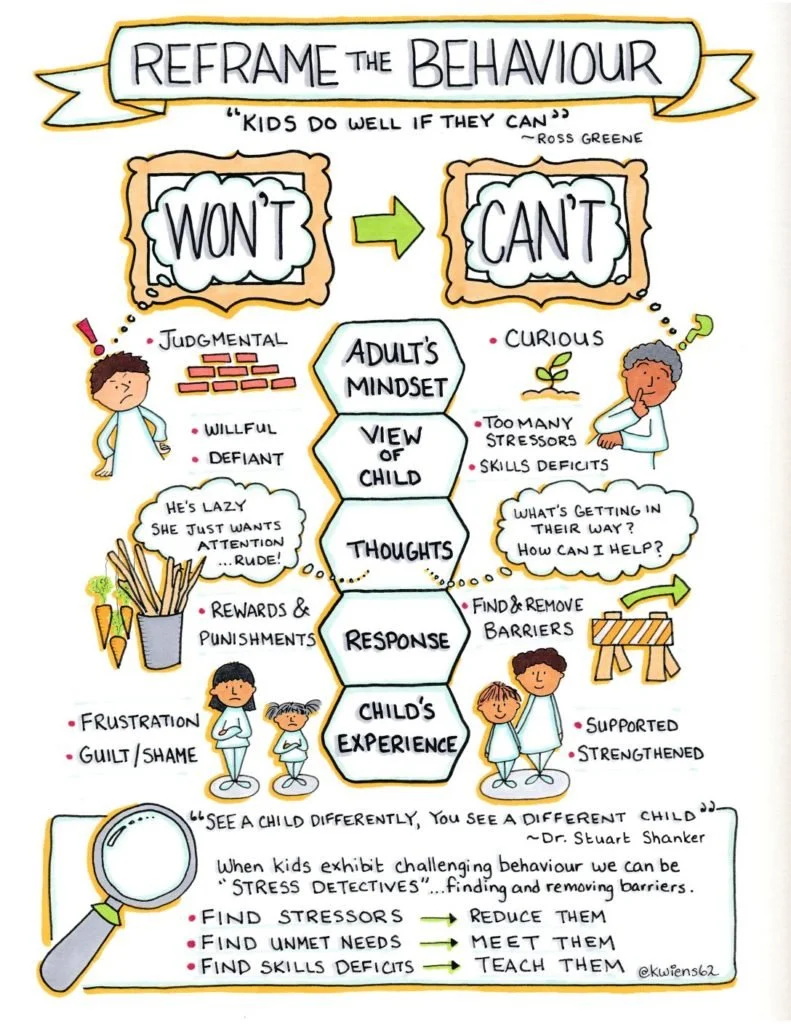
(Image by Kristin Wiens of northstarpaths.com)
The term “School Can’t” highlights that our children are not willfully refusing to attend school but are instead unable to attend school. The term is deliberately disruptive, arising because for many years school attendance difficulties have been conceptualised as primarily due to either: poor behaviour, poor parenting or student mental health.
It is School Can’t Australia’s lived experience that school attendance difficulties often arise as a stress response, caused by a mismatch between a student’s capacity and the demands they experience. Students who experience “school can’t” often develop mental health difficulties, but in many cases (especially for students with disability) these have developed in response to experiences of significant or chronic stress. (Read more about stressors in this article about school-based stressors).
The term "School Can't" is designed to make people stop and think about the beliefs and thoughts that frame how we make sense of and respond to school attendance difficulties. It invites them to shift from judgement to curiosity.
This reframe cues safety for students. Where judgement leads those experiencing it to feel threatened, frustrated or angry, curiosity opens a pathway to a different experience. Curiosity helps us connect with our young people, so we can identify any stressors and barriers impacting them, and seek to reduce these, restoring capacity in time. Curiosity leads students to feel that we are on their side, seeking to support and understand them.
This alternative language, also invites others to be curious, and to respond with compassion towards parent/carers. Instead of feeling judged and becoming defensive, parent/carers are more likely to feel safe, and able to collaborate with schools and health professionals.
We invite you to consider switching your language. "Can't" doesn't mean our children are defective or broken or that their state of being is permanently fixed. Instead, “Can’t” opens a pathway to: curiosity, recovery and restoration of capacity.
Thousands of children experience barriers to education and distress in relation to attending school. Teachers are also experiencing significant work-related stress.
School Can’t Australia’s parent carer community are glad to see a significant shift, away from the “refusal” narrative.
To take a deeper dive read: School can’t: a conceptual framework for reframing school refusal and recognising school related stress/distress by Rachel Leslie, Glenys Oberg, Cris Townley, Tiffany Westphal, Louise Rogers & Annette Brömdal